The Mozart half of the evening
Mozart in Vienna: arias and duets
Why Mozart belongs in a Hofburg concert: his Vienna years, the Burgtheater beside the palace, and the Figaro and Magic Flute numbers the programme names.
Reserve your seats in the Hofburg ↗Quick answer
Mozart settled in Vienna in 1781 and died there in 1791. The Hofburg programme names an aria from The Marriage of Figaro, which premiered at the Burgtheater beside the palace in 1786, and numbers from The Magic Flute, first staged in 1791.
Why Mozart belongs to Vienna
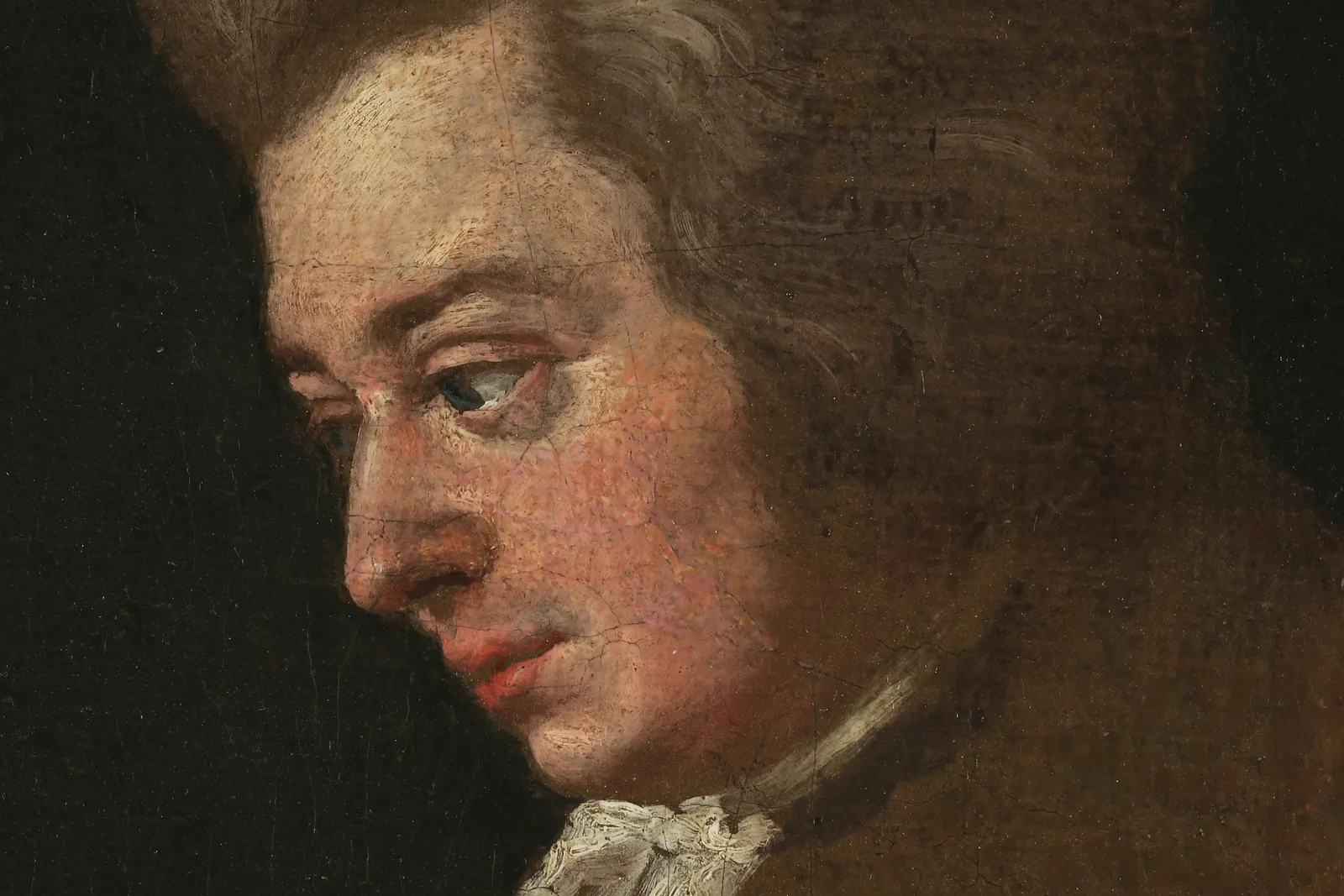
Mozart was dismissed by Archbishop Colloredo of Salzburg in 1781 and chose to stay in Vienna as a freelance performer and composer, with no court post to rely on until 1787. His opera Die Entführung aus dem Serail had its first night on 16 July 1782, and he married Constanze Weber on 4 August of that year at St Stephen's Cathedral. In December 1787 Emperor Joseph II appointed him imperial chamber composer, a part-time post. He died in Vienna on 5 December 1791, aged 35, so the city was his home for the last ten years of his life.
The theatre beside the palace
The Burgtheater opened on 14 March 1741, created by Empress Maria Theresa in a former ball house in the lower pleasure garden of the Hofburg. Its first building adjoined the palace, on the square at its edge. Three of Mozart's operas had their first nights there: Die Entführung aus dem Serail in 1782, Le nozze di Figaro in 1786 and Così fan tutte in 1790. The company moved to a new building on the Ringstrasse on 14 October 1888, so the old theatre no longer stands.
Figaro and the emperor
The Marriage of Figaro is an opera buffa in four acts, with an Italian libretto by Lorenzo Da Ponte based on Beaumarchais's play. Emperor Joseph II first blocked the play in Vienna, and Da Ponte then won his approval for an operatic version before Mozart wrote a note. The programme names an aria from the opera under its German title, Nun vergiß leises Flehn. The premiere was on 1 May 1786, at the Burgtheater, which stood beside the Hofburg whose halls now host the concert.
The Magic Flute
The Magic Flute had its first night on 30 September 1791 at the Theater auf der Wieden, about two months before Mozart died. Emanuel Schikaneder wrote the libretto in German and played Papageno himself. The first printed libretto calls it a Singspiel, a form that mixes singing and spoken dialogue. Papageno's aria about wanting a wife comes in act 2, and his duet with Papagena follows after the Three Boys stop him from hanging himself. The programme names both numbers.
A post at the court
In December 1787 Emperor Joseph II appointed Mozart imperial chamber composer. It was a part-time post that paid 800 florins a year, and it tied him to the court that lived in the Hofburg. The title gave Mozart standing in Vienna, but it did not replace the income from his operas and his concerts. For a visitor, the connection is simple. The halls of the Hofburg were the setting of the court he served, and the music of the concert is the music that Vienna's court theatres first heard.
How Mozart sits next to Strauss
On the programme sheet, Mozart's arias and duets come between waltzes and polkas, so a stage that has just turned in triple time is suddenly given a duet. The effect is of two Viennese traditions, the opera house and the dance hall, set side by side. Mozart wrote for the stage and the court, while the Strauss family wrote for the ballroom and the operetta theatre. Hearing them in one evening shows what they have in common: tunes that stay in the head after the lights come up.
Who this isn't for
If you want a full Mozart opera with sets and a chorus, this is not it. You hear two or three numbers sung by soloists with the orchestra, not an act, and the story of Figaro or The Magic Flute is not told. If you already know the operas well, you may find the selection short. If you are new to Mozart, it is a useful sample, and the choice of well-known tunes makes it easy to follow without a plot.
Frequently asked questions
When did Mozart move to Vienna?
In 1781, after a break with the Archbishop of Salzburg. He stayed in Vienna until his death in 1791.
Where was The Marriage of Figaro first performed?
At the Burgtheater in Vienna on 1 May 1786. That theatre stood next to the Hofburg.
What language is The Magic Flute in?
German. It first opened on 30 September 1791 at the Theater auf der Wieden.
Will I hear a whole opera?
No. The programme names a few arias and duets between Strauss waltzes and polkas.
Sources